
Book a Flight to Bucharest from €55
expand_more
1 Passenger, Economy
expand_morePromotional Code
expand_moreexpand_more
today
today
To book tickets for children traveling alone click here
Find the lowest fares to Bucharest
flight_takeoff
flight_land
€
Athens (ATH)to
Bucharest (OTP)10/05/2027 - 12/05/2027
Starting from
€105
Seen: 3 hours ago
Round-trip
Economy
Thessaloniki (SKG)to
Bucharest (OTP)25/01/2027 - 05/02/2027
Starting from
€165
Seen: 4 hours ago
Round-trip
Economy
Heraklion (HER)to
Bucharest (OTP)10/11/2026 - 11/11/2026
Starting from
€171
Seen: 29 minutes ago
Round-trip
Economy
Rhodes (RHO)to
Bucharest (OTP)14/11/2026 - 16/11/2026
Starting from
€164
Seen: 9 hours ago
Round-trip
Economy
Cairo (CAI)to
Bucharest (OTP)09/12/2026 - 14/12/2026
Starting from
€288
Seen: 16 hours ago
Round-trip
Economy
Chania (CHQ)to
Bucharest (OTP)16/06/2027 - 30/06/2027
Starting from
€175
Seen: 18 hours ago
Round-trip
Economy
Larnaka (LCA)to
Bucharest (OTP)17/01/2027 - 20/01/2027
Starting from
€253
Seen: 5 hours ago
Round-trip
Economy
*Fares displayed have been collected within the last 48hrs and may no longer be available at time of booking. Additional fees and charges for optional products and services may apply.
AEGEAN popular flights to Bucharest
flight_takeoff
flight_land
€

Athens (ATH)to
Bucharest (OTP)
Departing: 23/01/2027
One-way fare
Economy
Starting from
€71
Seen: 5 hours ago
Athens (ATH)to
Bucharest (OTP)
Departing: 28/01/2027
One-way fare
Economy
Starting from
€71
Seen: 5 hours ago
Athens (ATH)to
Bucharest (OTP)
Departing: 01/02/2027
One-way fare
Economy
Starting from
€71
Seen: 5 hours ago
Athens (ATH)to
Bucharest (OTP)
Departing: 30/01/2027
One-way fare
Economy
Starting from
€71
Seen: 5 hours ago
Athens (ATH)to
Bucharest (OTP)
Departing: 16/01/2027
One-way fare
Economy
Starting from
€71
Seen: 5 hours ago
Athens (ATH)to
Bucharest (OTP)
Departing: 17/01/2027
One-way fare
Economy
Starting from
€71
Seen: 5 hours ago
Athens (ATH)to
Bucharest (OTP)
Departing: 22/01/2027
One-way fare
Economy
Starting from
€71
Seen: 5 hours ago
Athens (ATH)to
Bucharest (OTP)
Departing: 29/01/2027
One-way fare
Economy
Starting from
€71
Seen: 5 hours ago
Athens (ATH)to
Bucharest (OTP)
Departing: 12/01/2027
One-way fare
Economy
Starting from
€71
Seen: 5 hours ago
Athens (ATH)to
Bucharest (OTP)
Departing: 26/05/2027
One-way fare
Economy
Starting from
€55
Seen: 20 hours ago
*Fares displayed have been collected within the last 48hrs and may no longer be available at time of booking. Additional fees and charges for optional products and services may apply.
Plan your Trip to Bucharest
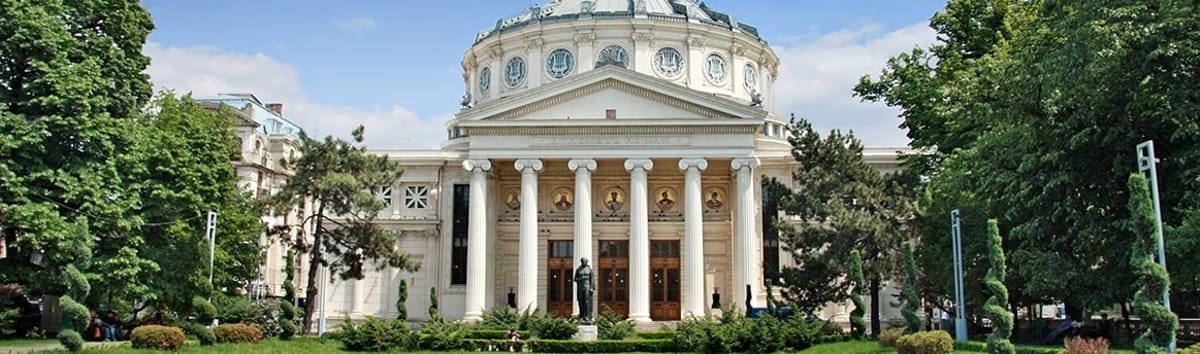
A city of huge parks, broad boulevards and impressive Belle Epoque architecture, Bucharest has figured in recent years on lists of the world’s increasingly popular tourist destinations. Built on the plains which stretch from the feet of the Carpathian mountains to the Danube, the city is said to have been founded by a certain Bucur (the word means ‘joy’), who was a shepherd particularly popular with the local people. In the middle of the 15th century the city was declared the capital of the rulers of Wallachia, and became capital of an independent Romania in 1880. In the 1980s Bucharest was redesigned by Nikolae Ceausescu, who attempted to transform the elegant city into a socialist capital, complete with massive totalitarian architecture. This project was brought to a halt by the revolution of 1989 and the fall of the regime. The Bucharest of today has a European ambiance, with restored buildings adorning the old city centre, historic monuments, beautiful neighbourhood districts and a lively nightlife. Book an Aegean flight to Bucharest and get to know the contemporary face of Romania.