
Book a Flight to Corfu from €50
expand_more
1 Passenger, Economy
expand_morePromotional Code
expand_moreexpand_more
today
today
To book tickets for children traveling alone click here
Find the lowest fares to Corfu
flight_takeoff
flight_land
€
Athens (ATH)to
Corfu (CFU)02/05/2027 - 16/05/2027
Starting from
€92
Seen: 22 hours ago
Round-trip
Economy
Larnaka (LCA)to
Corfu (CFU)26/11/2026 - 30/11/2026
Starting from
€187
Seen: 2 hours ago
Round-trip
Economy
Thessaloniki (SKG)to
Corfu (CFU)04/02/2027 - 07/02/2027
Starting from
€188
Seen: 9 hours ago
Round-trip
Economy
Heraklion (HER)to
Corfu (CFU)01/07/2027 - 08/07/2027
Starting from
€106
Seen: 7 hours ago
Round-trip
Economy
Rhodes (RHO)to
Corfu (CFU)10/11/2026 - 15/11/2026
Starting from
€228
Seen: 8 hours ago
Round-trip
Economy
Chania (CHQ)to
Corfu (CFU)20/11/2026 - 23/11/2026
Starting from
€243
Seen: 21 hours ago
Round-trip
Economy
Munich (MUC)to
Corfu (CFU)14/12/2026 - 14/01/2027
Starting from
€255
Seen: 7 hours ago
Round-trip
Economy
Milan (MXP)to
Corfu (CFU)04/01/2027 - 10/01/2027
Starting from
€320
Seen: 21 hours ago
Round-trip
Economy
London (LON)to
Corfu (CFU)07/02/2027 - 20/02/2027
Starting from
€339
Seen: 2 hours ago
Round-trip
Economy
Zurich (ZRH)to
Corfu (CFU)17/04/2027 - 24/04/2027
Starting from
€599
Seen: 13 hours ago
Round-trip
Economy
Tel Aviv (TLV)to
Corfu (CFU)28/01/2027 - 10/02/2027
Starting from
€260
Seen: 19 hours ago
Round-trip
Economy
Frankfurt (FRA)to
Corfu (CFU)20/08/2027 - 02/09/2027
Starting from
€321
Seen: 20 hours ago
Round-trip
Economy
*Fares displayed have been collected within the last 48hrs and may no longer be available at time of booking. Additional fees and charges for optional products and services may apply.
AEGEAN popular flights to Corfu
flight_takeoff
flight_land
€

Athens (ATH)to
Corfu (CFU)
Departing: 18/11/2026
One-way fare
Economy
Starting from
€50
Seen: 5 hours ago
Athens (ATH)to
Corfu (CFU)
Departing: 17/05/2027
One-way fare
Economy
Starting from
€50
Seen: 5 hours ago
Athens (ATH)to
Corfu (CFU)
Departing: 06/05/2027
One-way fare
Economy
Starting from
€50
Seen: 6 hours ago
Athens (ATH)to
Corfu (CFU)
Departing: 30/11/2026
One-way fare
Economy
Starting from
€50
Seen: 10 hours ago
Athens (ATH)to
Corfu (CFU)
Departing: 05/12/2026
One-way fare
Economy
Starting from
€50
Seen: 10 hours ago
Athens (ATH)to
Corfu (CFU)
Departing: 28/12/2026
One-way fare
Economy
Starting from
€50
Seen: 15 hours ago
Athens (ATH)to
Corfu (CFU)
Departing: 29/12/2026
One-way fare
Economy
Starting from
€50
Seen: 15 hours ago
Athens (ATH)to
Corfu (CFU)
Departing: 30/12/2026
One-way fare
Economy
Starting from
€50
Seen: 15 hours ago
Athens (ATH)to
Corfu (CFU)
Departing: 02/01/2027
One-way fare
Economy
Starting from
€50
Seen: 15 hours ago
Athens (ATH)to
Corfu (CFU)
Departing: 04/05/2027
One-way fare
Economy
Starting from
€50
Seen: 9 hours ago
*Fares displayed have been collected within the last 48hrs and may no longer be available at time of booking. Additional fees and charges for optional products and services may apply.
Plan your Trip to Corfu
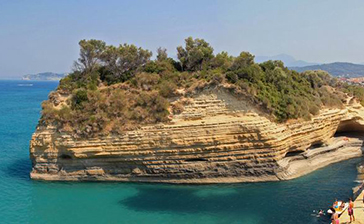
The fabled island of the ancient Phaeacians, the location chosen by Poseidon to indulge his passion for Amphitrite, continues to welcome and inspire the contemporary traveller. A place that seems plucked from a child’s fairy tale, with castles, knights and princesses, Corfu is without any doubt one of the most enchanting corners of Europe, a spot where the abundance of nature merges with a rich heritage of history and civilization. Explore the old town, a UNESCO World Heritage Site, with its buildings of rare architectural beauty, Spianada Square, the narrow streets, the great arched colonnade, the Campiello quarter, Mon Repos and the Achilleion Palace, and enjoy the villages of the interior, the picturesque fishing villages with the trees growing down to the water’s edge and Mt. Pantokratoras.
Relax on one of the many superb beaches with their crystal-clear water, sample the wonderful local cuisine and in the evening enjoy the bars in town. You will find every kind of hotel in Corfu, from farmhouses to luxury resorts. Easter is a wonderful time to come to the island. Book a flight to Corfu with Aegean Airlines and enjoy the island which entertained Ulysses, the resourceful hero of Homer’s Odyssey.