

Book a Flight to Baku
expand_more
1 Passenger, Economy
expand_morePromotional Code
expand_moreexpand_more
today
today
To book tickets for children traveling alone click here
Find the lowest fares to Baku
flight_takeoff
flight_land
€
There are no fares that match your filter criteria. Please adjust your filters.
There are no fares that match your filter criteria. Please adjust your filters.*Fares displayed have been collected within the last 48hrs and may no longer be available at time of booking. Additional fees and charges for optional products and services may apply.
AEGEAN popular flights to Baku
flight_takeoff
flight_land
€
Cabin Class option undefined Selectedkeyboard_arrow_down
Select Travel Class
There are no fares that match your filter criteria. Please adjust your filters.
There are no fares that match your filter criteria. Please adjust your filters.*Fares displayed have been collected within the last 48hrs and may no longer be available at time of booking. Additional fees and charges for optional products and services may apply.
Plan your Trip to Baku
Baku is the birthplace of chess player Garry Kasparov and cellist Mstislav Rostropovich. The ancient spiritual center of Zoroastrianism and the land of eternal fire. The “City of Winds” and one of the major oil capitals of the planet. An unusual blend of ancient mysticism and cosmopolitanism that enchants visitors.
Built on the southernmost tip of the Absheron Peninsula, on the Caspian Sea coastline, Azerbaijan’s capital city has historically been a crossroads of Eastern and Western cultures. Having served as a station on the legendary “Silk Road”, the seat of medieval kingdoms, an important city of great empires and the largest port on the Caspian Sea, Baku has fostered a culture of tolerance, religious coexistence and hospitality.
The city’s history lives on in the beautiful Fortified Old Town (Icherisheher) dating back to the 6th century, the New Town with grand European mansions of the nouveau riche thanks to the late 19th-century “oil boom”, the monumental Soviet heritage and the wonderful Promenade (1909) stretching 6 km along the waterfront, with iconic cultural and tourist attractions.
Traditional and modern, romantic and high-tech, in recent years the largest city in Caucasus has vigorously claimed its place on the world map as a Mecca of luxury and culture. Expressways and Formula 1 tracks, futuristic skyscrapers (Flame Towers), state-of-the-art cultural houses and new museums designed by famous architects, a strong culinary scene and a rising wine culture, along with the arrival of the luxury industry elite in the city and the hosting of major sporting events guarantee great things for the future.
Fly to Baku with Aegean and discover the “Paris of the Caucasus”, a modern Eurasian metropolis of great contrasts, a stone's throw from the golden sands and luxurious resorts of the Caspian Sea.
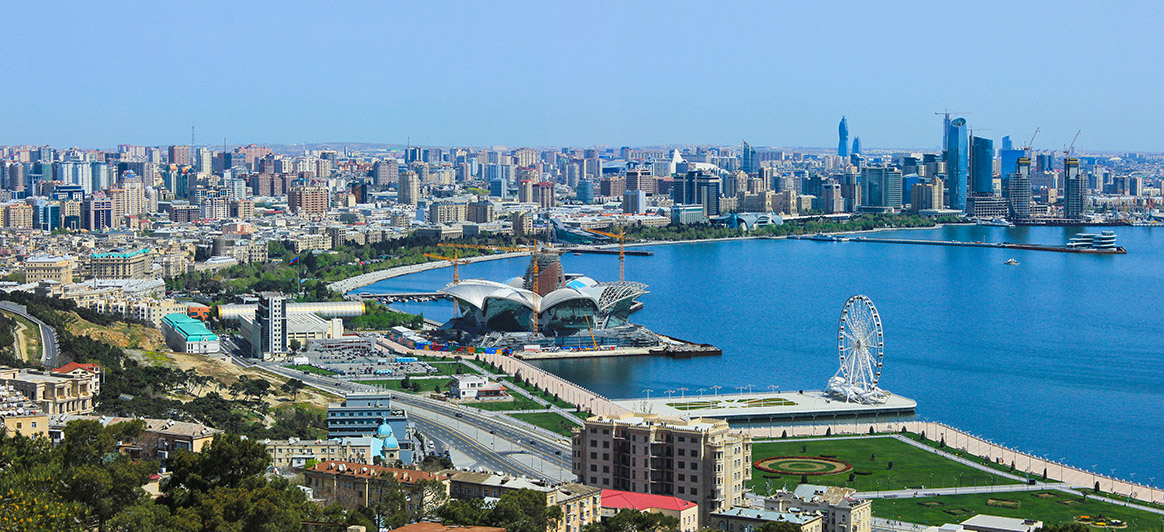
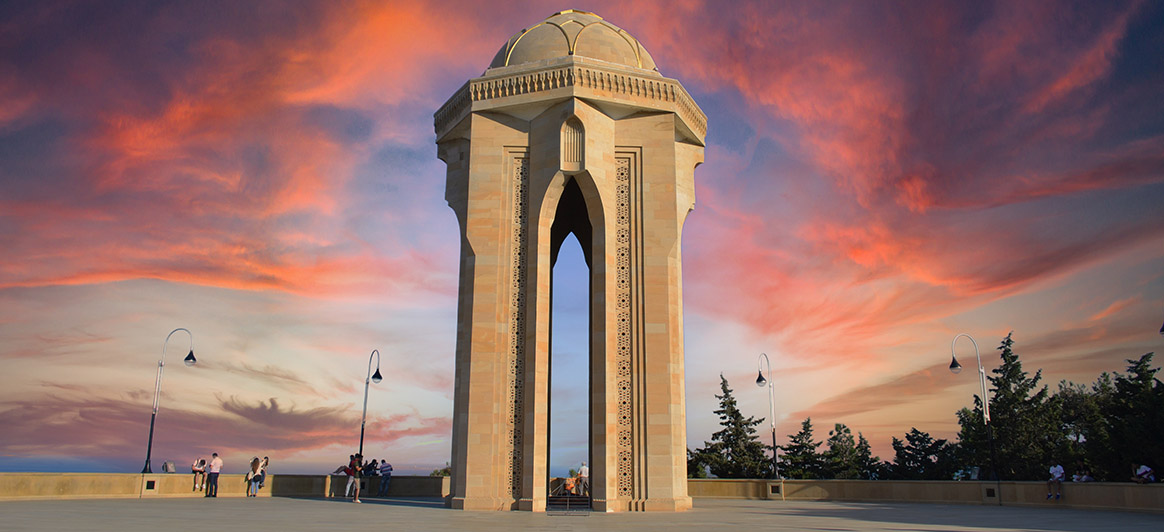


Old Town (Icheri Sheher): The medieval heart of Baku beats in the Old Town, a World Heritage Site (UNESCO, 2000). Fortified behind a wall (12th century) standing 10 meters tall and 3.5 meters wide, the “Baku Fortress” exudes a mysterious, sensual, oriental atmosphere on every corner. Walk through a maze of picturesque cobblestone streets with unique historical monuments such as palaces, mosques, hammams, caravanserais, museums, theaters, bazaars, small art galleries, craft shops, teahouses (çayevi), as well as many cafés, bars and restaurants. The journey back in time begins at the grand arch portal “Gosha Gala Tower”, where you can find themed souvenir shops.
Maiden Tower: The most recognizable national structure (its image is printed on the national currency and on official letterheads) is an imposing 12th-century stone tower, standing 29.5 meters tall (with a diameter of 16.5 m) on the Old Town’s skyline. To this day, the origin of the building remains a mystery amongst experts (ancient Zoroastrian temple, observatory, lighthouse) and a source of inspiration for folk legends and even works of art. One legend attributes its name to the young daughter of the ruler (Khan) of Baku, who committed suicide by falling from its top into the wild waves of the Caspian Sea, during Zoroastrian times. Today, the structure houses a small museum on the city’s history. The tower’s top can be reached by climbing narrow steps and it offers a panoramic view of the Old Town, the Promenade and the Bay of Baku. World Heritage Site (UNESCO, 2001).
Website: https://icherisheher.gov.az/en/
Palace of the Shirvanshahs: Known as “The Pearl of Azerbaijan”, this magnificent 15th-century palace complex takes the visitor on a magic journey back in time, to the lost medieval kingdom of Shirvan and the Shirvanshah dynasty that ruled it for centuries. Restored to its former glory, it is an architectural gem and a World Heritage Site (UNESCO, 2000) that dominates the Old Town’s skyline. In addition to the palace, it includes mosques, hammams, a mausoleum, a magnificent Divankhana (elevated octagonal rotunda – mausoleum) in an enclosed courtyard, water tanks (ovdan) and impressive gates with arabesque stone decorations. The palace houses a museum where you can admire rare artefacts and centuries-old relics of unique elegance. Don’t miss out on the Palace Mosque, the Keygubad Mosque and the “Dervish Mausoleum”, dedicated to Seyid Yahya Bakuvi, a Sufi philosopher and poet.
Address: www.shirvanshah.az/
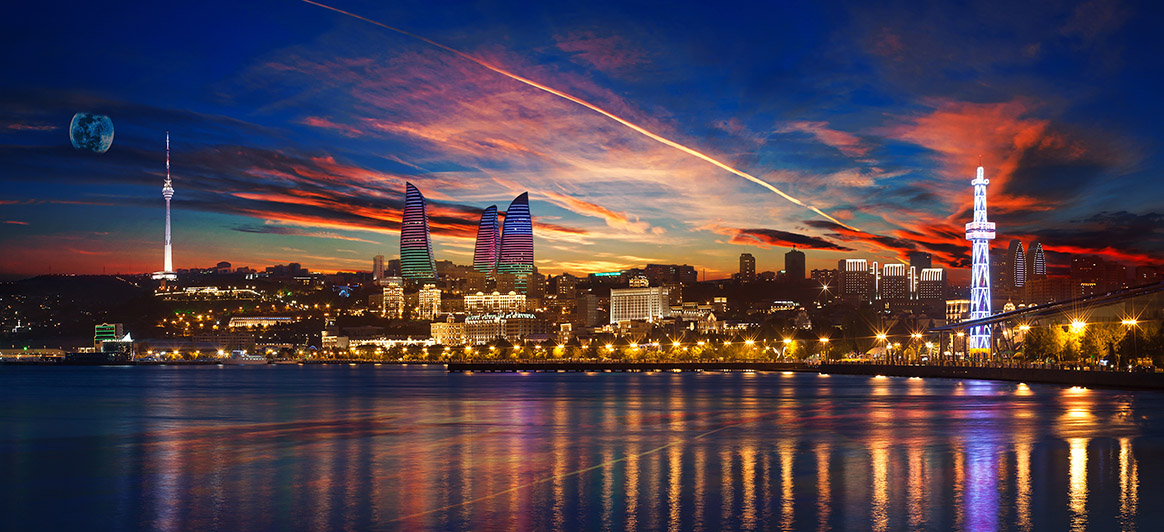
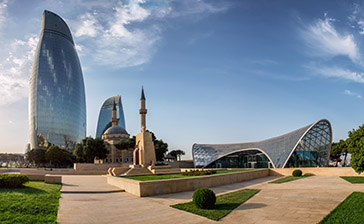
Flame Towers : Visible from even the most distant parts of the city, this impressive triple complex of flame-shaped skyscrapers next to the “Alley of Martyrs” is considered a feat of modern architecture, but also a symbol of the element of fire that elevated Baku to a Zoroastrianism worship center. The tallest of towers has a height of 182 meters (the largest in the country), while the building complex hosts one of the city’s most prestigious luxury hotels, as well as a shopping center with cafés, bars and fine dining restaurants. When the night falls, their curved facades are illuminated by 10,000 LED screens in the colors of the national flag, depicting the movement of fire. The best time to admire this unique spectacle is, of course, in the evening, the Promenade and Highland Park being the perfect viewing points. The best way to get to the towers is to take the glass funicular from the Promenade.
Address: 9R5G+QJV, Baku.
Heydar Aliyev Cultural Center: Built in 2012 and designed by the famous Iraqi-British architect Zaha Hadid, this iconic cultural center is a symbol of modern Baku. The innovative white construction with a uniform wavy form, without a single straight line, captures the eye and impresses the viewer with its intelligent use of space. Inside the building you will find a museum with permanent collections and temporary art exhibitions, an event hall and an elegant cafeteria. Amongst other things, you can see the exhibition about the life and work of the country’s head of state, Heydar Aliyev, an exhibition of miniature Azerbaijani monuments and a classic car collection. In 2014, the “Design of the Year” award was granted to the building by the London Design Museum.
Address: 1 Heydar Aliyev Avenue, www.heydaraliyevcenter.az/#main
National Art Museum: Housed in an impressive 19th-century double mansion, Azerbaijan’s largest museum was founded in 1936, hosting an impressive collection of 18,000 art treasures from various countries: Turkey, Iran, Japan, China, Russia, and Western Europe. The collection contains items from the 4th millennium BC to this day. From painted ceramics, copper and bronze carved utensils, carpets, jewelry and miniature paintings by Azeri painters of the 15th and 16th centuries to paintings and sculptures by contemporary artists.
Address: Niyaziküç. 9/11, www.nationalartmuseum.az/
Carpet Museum: Designed in 2014 by Austrian architect Franz Yanz, this impressive museum in the shape of a rolled-up carpet constitutes an architectural icon of the city. The entire history of Azerbaijan’s ancient textile art unfolds on the inside (Intangible Cultural Heritage of Humanity, 2010 UNESCO). It hosts the largest collection of Azeri carpets (6,000 unique carpets) in the world. The permanent exhibition has carpets dating back to the 17th century, sorted by geographic region and style, divided in 7 sections (7 regional schools of Azeri weaving that reflect the local culture, nature and beliefs of each region). In the museum you will also find other textile products, ceramics, works of art made of glass, wood and paper, fabrics, costumes, embroidery and jewelry. Don’t miss out on the live weaving demonstrations and the exhibition on the legendary carpet designer Larif Karimov. The museum has an amazing art shop where you can buy souvenirs.
Address: 28 Mikayıl Hüseynov Prospekti, http://azcarpetmuseum.az/front/en.
Heydar Mosque: Built in 2014, this monumental building with an area of 12,000 m2 it is the largest work of religious architecture in South Caucasus. It is a magnificent special stone construction, decorated with marble and wood on the interior. The four minarets standing 95 meters tall and the two large domes (55 and 35 meters tall), the artful decoration of the facade with unique stones and the calligraphic transcriptions of verses from the Koran on the sides of the domes create a visual masterpiece of exceptional beauty. Another impressive detail: The interior of the mosque is decorated with 920 m2 of carpets that are copies of the famous “Sheikh Safi” (1539), an elaborate silk and wool carpet of the Tabriz school of weaving, which is on display at the VA Museum in London. With a capacity of 75,000 people, the mosque is considered a symbol of unity and religious tolerance amongst the followers of Islam.
Address: Binagadi district, Baku.
Fountain Square: Spread out between the Gosha Gala Tower (arched gateway to the Old City), Baku’s main shopping street (Nizami St.) and the Promenade, this huge square is at the heart of the city. It is the most popular meeting point of Bakuvians for a leisurely stroll, for fun, as well as for important public events. The square’s hallmark are the dozens of beautiful fountains (a legacy of the Soviet period) with their rich sculptural decorations and modern design, which are illuminated at night, offering a spectacular sight. The elegant cobblestone paths and passages between alleyways with cypress and palm trees make walking around the square an unforgettable experience.
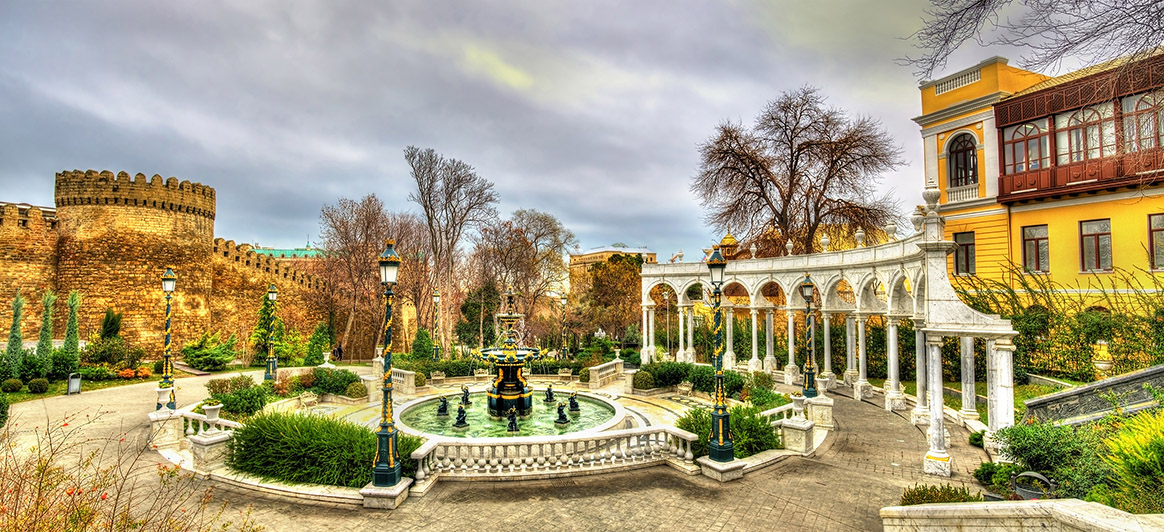
Philharmonic Garden: Also known as “Governor’s Park”, the Philharmonic Garden is a beautiful and idyllic oasis in the city center. Designed in a baroque style with a sumptuous marble fountain in the center and an impressive marble peristyle on one side, this beautiful garden was founded in 1830, but took on its current form in 2007. It is an ideal destination to escape from the city noise or to admire the sunset. The parrots flying free in the park create an exotic atmosphere and, in the evenings, the sounds of live classical music from open-air concerts by local or international musical ensembles contribute to the dream-like sensation.
Address: KichicQala, Baku.

Baku offers unique shopping experiences for vintage and luxury lovers. Traditional Azeri shops and bustling bazaars coexist with expensive boutiques of major fashion houses and ultra-modern shopping centers, where you can find any international brand and various entertainment options.
Head to Icherisheher (İçəriŞəhər = Inner City), where you can find many stylish antique stores and handmade souvenir shops. Get an Armudu (pear-shaped tea cup made of porcelain, glass or metal), a Chirag (ceramic in the shape of an oil lamp, especially popular in the Middle Ages and a symbol of fire), Azeri musical instruments, copper household utensils, Papakhas (the national wool hat), embroidery or a traditional Azeri carpet (a centuries-old art for which Azeri weaving masters are well-known).
Women usually leave with Kelaghayi (traditional silk scarf using the batik technique). Make sure to also visit the silversmith workshops - shops to admire real works of art from precious metals, made using local techniques.
Outside the walls of Icherisheher, all roads lead to the famous Nizami Street
(named after the Persian poet Nizami Ganjavi), also known as Torgovaya (“Merchants' Street” in Russian), which runs through the city center. The upscale shopping street, starting on the bustling Fountain Square and ending at Rashid Behbudov St., is full of stylish fashion and accessories boutiques, independent shops with all the major designer brands and department stores surrounded by stylish cafés, expensive restaurants and several European embassies.
For luxury shopping, visit Neftchilar Avenue (with its exquisite architecture from the “oil boom” period, a central artery, parallel to Baku’s Promenade) where the big fashion houses of the world are located (Tiffany & Co, Bulgari, Gucci, Christian Dior), as well as expensive restaurants, luxury car showrooms (the street is part of the Baku Formula 1 Grand Prix) and the trendy Port Baku Mall with big designer brands (Armani, Burberry, McQueen, Valentino, Michael Kors), a refined atmosphere, stylish cafés and restaurants.
More shopping centers worth visiting: the six-story Baku Bulvar overlooking the Bay of Baku (luxury brands, supermarket, cinema, Turkish and Italian restaurants on the top floor, bowling, children's play area and planetarium), the modern 28 Mall (28th May Street ) with international fashion chains (Zara, Massimo Dutti), cafés, cinemas, restaurants and a young crowd.
Visit the famous Yashil Bazaar (Green Bazaar) in the Old Town, the largest covered organic food market in South Caucasus to buy (and taste) exotic, locally produced products: from spices, herbs and jams to turshu (pickles), black caviar from the Caspian Sea and saffron from Absheron.

The culinary culture of the Azeris provides visitors with an authentic cultural experience. The Azeri cuisine is a unique blend of Eastern European, Middle Eastern, Mediterranean and Persian traditions, Caucasus and the Caspian Sea, ancient cooking techniques using period utensils, oriental hospitality and western savoir vivre.
The best way to experience authentic Azeri dining is to make a reservation in the classic restaurants of the Old Town, decorated with amazing carpets, old photos of Baku and handmade traditional objects. Even better, visit one of the restored caravanserais that now serve as cafés and eateries. Dining options in Baku are inexhaustible, from small bistros and teahouses (cay xanalar) to elegant western-style restaurants, ethnic cuisines (Chinese, Japanese, Italian), international fast food chains and fine dining restaurants.
Azerbaijan is the land of plov (pilaf), dolma and kebabs. There are countless versions of plov (rice with herbs, dried fruit and meat or fish). The most popular are fisinjan (with minced meat and a pomegranate sauce with nuts), shirin (dried apricots and raisins) and shah (rice in a terrine from buttered “lavash”, i.e. thin sheets of unleavened bread). There are also different versions of dolma (bites of rice and minced lamb with herbs and nuts, wrapped in cabbage or vine leaves).
Some of the best kebabs in the world can be found here. Baliq kebabs (fish kebabs, usually sturgeon) with sour plum sauce, tika kebabs (lamb skewers marinated in onion, vinegar and pomegranate juice), lula kebabs (mutton kebabs with spices and herbs). Don’t miss out on the opportunity to try the local beer (piva).
Be sure to also try qutab, the favorite snack of Bakuvians (a type of rolled-up savory crepe filled with cheese, spinach or minced lamb, baked in a traditional tandoor oven), dovga (cold soup made of yogurt, rice and herbs), Lavangi (grilled chicken or fish stuffed with walnuts, raisins, onions and sumac, baked in a cylindrical clay tandoor oven), kuku (omelet with onions and herbs, accompanied by a thin lavash pita).
Satisfy your sweet tooth with the syrupy delicacies of Azerbaijan, such as the typical Pahklava (“phyllo” dough filled with chopped peanuts or walnuts, drenched in sweet syrup or honey) or sheki halva, firni (cream made from milk, rice flour and sugar), shekerbura (dough crescents made from almond flour, hazelnuts or walnuts and sugar).
Don’t miss out on the chance to browse the fantastic Yaşıl Bazaar (Green Bazaar), the largest covered organic food market in South Caucasus. All the tasty treasures of the Azeri land can be found spread out on its stalls: herbs and spices, nuts and dried fruits, jams and compotes, spoon sweets, turshu (pickles), juicy pomegranates, quince juice, as well as exquisite delicacies such as black caviar from the Caspian Sea and saffron from the Absheron Peninsula.
Quench your thirst with exotic drinks such as Ayran (yogurt with water and salt), sherbet (water flavored with saffron, mint and basil with added berries, lemon and sugar) or Boza (sweet drink from fermented wheat and rye flavored with milk or honey).
Get a taste of Azeri breakfast by trying the famous pomidor chigirtma. Rich and hearty, it consists of an omelet with cooked tomatoes and hot freshly baked tandoori bread, honey, cheese, cream, yogurt and endless amounts of tea.
Follow the locals in their tea ceremony. Black tea is the national drink of the Azeris and a symbol of hospitality, with a ceremony that has evolved over the centuries. It is usually served with lemon, sugar and honey in a pear-shaped cup and it is almost always accompanied by a tray of jams and sweets. You can enjoy it in classic teahouses (cay xanalar), bistros, luxury hotel lobbies, and after your meal as a digestive.

-
Novruz: Azerbaijan's favorite traditional holiday with ancient roots and a dual significance. Azerbaijanis celebrate the coming of spring and the rebirth of nature along with the Persian New Year (Novruz = New Day) as an official national holiday, every year on the day of the Vernal Equinox (March 21). The celebrations begin a month earlier with various customs and rituals (decorating the streets and squares, tree planting, egg painting, preparing special sweets such as pakhlava, fortune-telling), while every Tuesday a bonfire is lit and people jump over the flames. The celebration reaches its peak in the last week with a family dinner (with candles, samani - green wheat grass, khoncha), walking, traditional dancing and singing on the streets, sports games and competitions. Novruz is included in the list of the Intangible Cultural Heritage of Humanity (UNESCO, 2009).
-
Baku International Jazz Festival: The love of the Azeri for jazz music is expressed in all its glory at this premier ten-day festival every October (18-27/10). It is an amazing musical experience that deifies jazz music through the meeting of leading musicians and performers of the genre from all over the world with local musicians, including also art exhibitions and themed film screenings; it takes place in iconic venues of the city, such as the Mugham Center.
-
F1 Ajerbaijan Grand Prix 2023: Since 2017, the eighth race of the F1 World Championship has been held at the Baku City Circuit, Baku’s spectacular Formula 1 road circuit (6 km / 51 laps). The world’s elite F1 drivers meet in epic sprints and dramatic showdowns against the backdrop of Baku’s Old Town and the Promenade. From 28 to 30 April.
-
ANIMAFILM (Baku International Animation Festival): One of the most lively and youthful festivals in Baku, dedicated to the art of animation. The festival has a competitive nature and it focuses on a specific theme each year, with films from the emerging local scene of directors and studios, as well as dozens of international productions. The program is also accompanied by conferences, master classes, exhibitions and concerts. Join us at the Nizami Cinema Centre in autumn (September or October).

Travel from the airport to the city
The easiest and cheapest way to reach Baku city center is to take the Aero Express bus line that connects the airport (terminals 1 & 2) with the Central Railway Station / Subway Station “28th May”, making 2 intermediate stops at Surakhani Bridge and the “Koroglu” subway station. The journey takes 30 minutes (depending on weather conditions and traffic). The bus service runs from 06.00 to 17.00, departing every 30 minutes, or every 60 minutes (after 21.00). The Airport Express bus operates with the electronic card payment system. You can get the card from the “Baku Card” vending machines and validate it at the special machines inside the bus.
Alternatively, you can travel by taxi using the “Baku Taxi” state services for guaranteed safety and quality. The vehicles are parked in front of the exit of Terminal 1 (line 2), in a special waiting area for receiving passengers. You can make a reservation at the taxi service counter inside T1 by calling 1000, as well as via a special mobile application.
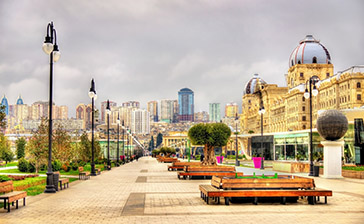
Old Town (Icheri Sheher): The medieval heart of Baku beats in the Old Town, a World Heritage Site (UNESCO, 2000). Fortified behind a wall (12th century) standing 10 meters tall and 3.5 meters wide, the “Baku Fortress” exudes a mysterious, sensual, oriental atmosphere on every corner. Walk through a maze of picturesque cobblestone streets with unique historical monuments such as palaces, mosques, hammams, caravanserais, museums, theaters, bazaars, small art galleries, craft shops, teahouses (çayevi), as well as many cafés, bars and restaurants. The journey back in time begins at the grand arch portal “Gosha Gala Tower”, where you can find themed souvenir shops.
Maiden Tower: The most recognizable national structure (its image is printed on the national currency and on official letterheads) is an imposing 12th-century stone tower, standing 29.5 meters tall (with a diameter of 16.5 m) on the Old Town’s skyline. To this day, the origin of the building remains a mystery amongst experts (ancient Zoroastrian temple, observatory, lighthouse) and a source of inspiration for folk legends and even works of art. One legend attributes its name to the young daughter of the ruler (Khan) of Baku, who committed suicide by falling from its top into the wild waves of the Caspian Sea, during Zoroastrian times. Today, the structure houses a small museum on the city’s history. The tower’s top can be reached by climbing narrow steps and it offers a panoramic view of the Old Town, the Promenade and the Bay of Baku. World Heritage Site (UNESCO, 2001).
Website: https://icherisheher.gov.az/en/
Palace of the Shirvanshahs: Known as “The Pearl of Azerbaijan”, this magnificent 15th-century palace complex takes the visitor on a magic journey back in time, to the lost medieval kingdom of Shirvan and the Shirvanshah dynasty that ruled it for centuries. Restored to its former glory, it is an architectural gem and a World Heritage Site (UNESCO, 2000) that dominates the Old Town’s skyline. In addition to the palace, it includes mosques, hammams, a mausoleum, a magnificent Divankhana (elevated octagonal rotunda – mausoleum) in an enclosed courtyard, water tanks (ovdan) and impressive gates with arabesque stone decorations. The palace houses a museum where you can admire rare artefacts and centuries-old relics of unique elegance. Don’t miss out on the Palace Mosque, the Keygubad Mosque and the “Dervish Mausoleum”, dedicated to Seyid Yahya Bakuvi, a Sufi philosopher and poet.
Address: www.shirvanshah.az/
Flame Towers : Visible from even the most distant parts of the city, this impressive triple complex of flame-shaped skyscrapers next to the “Alley of Martyrs” is considered a feat of modern architecture, but also a symbol of the element of fire that elevated Baku to a Zoroastrianism worship center. The tallest of towers has a height of 182 meters (the largest in the country), while the building complex hosts one of the city’s most prestigious luxury hotels, as well as a shopping center with cafés, bars and fine dining restaurants. When the night falls, their curved facades are illuminated by 10,000 LED screens in the colors of the national flag, depicting the movement of fire. The best time to admire this unique spectacle is, of course, in the evening, the Promenade and Highland Park being the perfect viewing points. The best way to get to the towers is to take the glass funicular from the Promenade.
Address: 9R5G+QJV, Baku.
Heydar Aliyev Cultural Center: Built in 2012 and designed by the famous Iraqi-British architect Zaha Hadid, this iconic cultural center is a symbol of modern Baku. The innovative white construction with a uniform wavy form, without a single straight line, captures the eye and impresses the viewer with its intelligent use of space. Inside the building you will find a museum with permanent collections and temporary art exhibitions, an event hall and an elegant cafeteria. Amongst other things, you can see the exhibition about the life and work of the country’s head of state, Heydar Aliyev, an exhibition of miniature Azerbaijani monuments and a classic car collection. In 2014, the “Design of the Year” award was granted to the building by the London Design Museum.
Address: 1 Heydar Aliyev Avenue, www.heydaraliyevcenter.az/#main
National Art Museum: Housed in an impressive 19th-century double mansion, Azerbaijan’s largest museum was founded in 1936, hosting an impressive collection of 18,000 art treasures from various countries: Turkey, Iran, Japan, China, Russia, and Western Europe. The collection contains items from the 4th millennium BC to this day. From painted ceramics, copper and bronze carved utensils, carpets, jewelry and miniature paintings by Azeri painters of the 15th and 16th centuries to paintings and sculptures by contemporary artists.
Address: Niyaziküç. 9/11, www.nationalartmuseum.az/
Carpet Museum: Designed in 2014 by Austrian architect Franz Yanz, this impressive museum in the shape of a rolled-up carpet constitutes an architectural icon of the city. The entire history of Azerbaijan’s ancient textile art unfolds on the inside (Intangible Cultural Heritage of Humanity, 2010 UNESCO). It hosts the largest collection of Azeri carpets (6,000 unique carpets) in the world. The permanent exhibition has carpets dating back to the 17th century, sorted by geographic region and style, divided in 7 sections (7 regional schools of Azeri weaving that reflect the local culture, nature and beliefs of each region). In the museum you will also find other textile products, ceramics, works of art made of glass, wood and paper, fabrics, costumes, embroidery and jewelry. Don’t miss out on the live weaving demonstrations and the exhibition on the legendary carpet designer Larif Karimov. The museum has an amazing art shop where you can buy souvenirs.
Address: 28 Mikayıl Hüseynov Prospekti, http://azcarpetmuseum.az/front/en.
Heydar Mosque: Built in 2014, this monumental building with an area of 12,000 m2 it is the largest work of religious architecture in South Caucasus. It is a magnificent special stone construction, decorated with marble and wood on the interior. The four minarets standing 95 meters tall and the two large domes (55 and 35 meters tall), the artful decoration of the facade with unique stones and the calligraphic transcriptions of verses from the Koran on the sides of the domes create a visual masterpiece of exceptional beauty. Another impressive detail: The interior of the mosque is decorated with 920 m2 of carpets that are copies of the famous “Sheikh Safi” (1539), an elaborate silk and wool carpet of the Tabriz school of weaving, which is on display at the VA Museum in London. With a capacity of 75,000 people, the mosque is considered a symbol of unity and religious tolerance amongst the followers of Islam.
Address: Binagadi district, Baku.
Fountain Square: Spread out between the Gosha Gala Tower (arched gateway to the Old City), Baku’s main shopping street (Nizami St.) and the Promenade, this huge square is at the heart of the city. It is the most popular meeting point of Bakuvians for a leisurely stroll, for fun, as well as for important public events. The square’s hallmark are the dozens of beautiful fountains (a legacy of the Soviet period) with their rich sculptural decorations and modern design, which are illuminated at night, offering a spectacular sight. The elegant cobblestone paths and passages between alleyways with cypress and palm trees make walking around the square an unforgettable experience.
Philharmonic Garden: Also known as “Governor’s Park”, the Philharmonic Garden is a beautiful and idyllic oasis in the city center. Designed in a baroque style with a sumptuous marble fountain in the center and an impressive marble peristyle on one side, this beautiful garden was founded in 1830, but took on its current form in 2007. It is an ideal destination to escape from the city noise or to admire the sunset. The parrots flying free in the park create an exotic atmosphere and, in the evenings, the sounds of live classical music from open-air concerts by local or international musical ensembles contribute to the dream-like sensation.
Address: KichicQala, Baku.
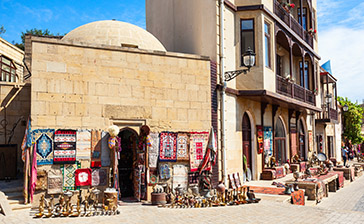
Baku offers unique shopping experiences for vintage and luxury lovers. Traditional Azeri shops and bustling bazaars coexist with expensive boutiques of major fashion houses and ultra-modern shopping centers, where you can find any international brand and various entertainment options.
Head to Icherisheher (İçəriŞəhər = Inner City), where you can find many stylish antique stores and handmade souvenir shops. Get an Armudu (pear-shaped tea cup made of porcelain, glass or metal), a Chirag (ceramic in the shape of an oil lamp, especially popular in the Middle Ages and a symbol of fire), Azeri musical instruments, copper household utensils, Papakhas (the national wool hat), embroidery or a traditional Azeri carpet (a centuries-old art for which Azeri weaving masters are well-known).
Women usually leave with Kelaghayi (traditional silk scarf using the batik technique). Make sure to also visit the silversmith workshops - shops to admire real works of art from precious metals, made using local techniques.
Outside the walls of Icherisheher, all roads lead to the famous Nizami Street
(named after the Persian poet Nizami Ganjavi), also known as Torgovaya (“Merchants' Street” in Russian), which runs through the city center. The upscale shopping street, starting on the bustling Fountain Square and ending at Rashid Behbudov St., is full of stylish fashion and accessories boutiques, independent shops with all the major designer brands and department stores surrounded by stylish cafés, expensive restaurants and several European embassies.
For luxury shopping, visit Neftchilar Avenue (with its exquisite architecture from the “oil boom” period, a central artery, parallel to Baku’s Promenade) where the big fashion houses of the world are located (Tiffany & Co, Bulgari, Gucci, Christian Dior), as well as expensive restaurants, luxury car showrooms (the street is part of the Baku Formula 1 Grand Prix) and the trendy Port Baku Mall with big designer brands (Armani, Burberry, McQueen, Valentino, Michael Kors), a refined atmosphere, stylish cafés and restaurants.
More shopping centers worth visiting: the six-story Baku Bulvar overlooking the Bay of Baku (luxury brands, supermarket, cinema, Turkish and Italian restaurants on the top floor, bowling, children's play area and planetarium), the modern 28 Mall (28th May Street ) with international fashion chains (Zara, Massimo Dutti), cafés, cinemas, restaurants and a young crowd.
Visit the famous Yashil Bazaar (Green Bazaar) in the Old Town, the largest covered organic food market in South Caucasus to buy (and taste) exotic, locally produced products: from spices, herbs and jams to turshu (pickles), black caviar from the Caspian Sea and saffron from Absheron.
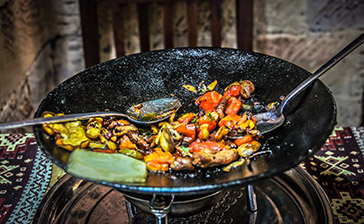
The culinary culture of the Azeris provides visitors with an authentic cultural experience. The Azeri cuisine is a unique blend of Eastern European, Middle Eastern, Mediterranean and Persian traditions, Caucasus and the Caspian Sea, ancient cooking techniques using period utensils, oriental hospitality and western savoir vivre.
The best way to experience authentic Azeri dining is to make a reservation in the classic restaurants of the Old Town, decorated with amazing carpets, old photos of Baku and handmade traditional objects. Even better, visit one of the restored caravanserais that now serve as cafés and eateries. Dining options in Baku are inexhaustible, from small bistros and teahouses (cay xanalar) to elegant western-style restaurants, ethnic cuisines (Chinese, Japanese, Italian), international fast food chains and fine dining restaurants.
Azerbaijan is the land of plov (pilaf), dolma and kebabs. There are countless versions of plov (rice with herbs, dried fruit and meat or fish). The most popular are fisinjan (with minced meat and a pomegranate sauce with nuts), shirin (dried apricots and raisins) and shah (rice in a terrine from buttered “lavash”, i.e. thin sheets of unleavened bread). There are also different versions of dolma (bites of rice and minced lamb with herbs and nuts, wrapped in cabbage or vine leaves).
Some of the best kebabs in the world can be found here. Baliq kebabs (fish kebabs, usually sturgeon) with sour plum sauce, tika kebabs (lamb skewers marinated in onion, vinegar and pomegranate juice), lula kebabs (mutton kebabs with spices and herbs). Don’t miss out on the opportunity to try the local beer (piva).
Be sure to also try qutab, the favorite snack of Bakuvians (a type of rolled-up savory crepe filled with cheese, spinach or minced lamb, baked in a traditional tandoor oven), dovga (cold soup made of yogurt, rice and herbs), Lavangi (grilled chicken or fish stuffed with walnuts, raisins, onions and sumac, baked in a cylindrical clay tandoor oven), kuku (omelet with onions and herbs, accompanied by a thin lavash pita).
Satisfy your sweet tooth with the syrupy delicacies of Azerbaijan, such as the typical Pahklava (“phyllo” dough filled with chopped peanuts or walnuts, drenched in sweet syrup or honey) or sheki halva, firni (cream made from milk, rice flour and sugar), shekerbura (dough crescents made from almond flour, hazelnuts or walnuts and sugar).
Don’t miss out on the chance to browse the fantastic Yaşıl Bazaar (Green Bazaar), the largest covered organic food market in South Caucasus. All the tasty treasures of the Azeri land can be found spread out on its stalls: herbs and spices, nuts and dried fruits, jams and compotes, spoon sweets, turshu (pickles), juicy pomegranates, quince juice, as well as exquisite delicacies such as black caviar from the Caspian Sea and saffron from the Absheron Peninsula.
Quench your thirst with exotic drinks such as Ayran (yogurt with water and salt), sherbet (water flavored with saffron, mint and basil with added berries, lemon and sugar) or Boza (sweet drink from fermented wheat and rye flavored with milk or honey).
Get a taste of Azeri breakfast by trying the famous pomidor chigirtma. Rich and hearty, it consists of an omelet with cooked tomatoes and hot freshly baked tandoori bread, honey, cheese, cream, yogurt and endless amounts of tea.
Follow the locals in their tea ceremony. Black tea is the national drink of the Azeris and a symbol of hospitality, with a ceremony that has evolved over the centuries. It is usually served with lemon, sugar and honey in a pear-shaped cup and it is almost always accompanied by a tray of jams and sweets. You can enjoy it in classic teahouses (cay xanalar), bistros, luxury hotel lobbies, and after your meal as a digestive.
-
Novruz: Azerbaijan's favorite traditional holiday with ancient roots and a dual significance. Azerbaijanis celebrate the coming of spring and the rebirth of nature along with the Persian New Year (Novruz = New Day) as an official national holiday, every year on the day of the Vernal Equinox (March 21). The celebrations begin a month earlier with various customs and rituals (decorating the streets and squares, tree planting, egg painting, preparing special sweets such as pakhlava, fortune-telling), while every Tuesday a bonfire is lit and people jump over the flames. The celebration reaches its peak in the last week with a family dinner (with candles, samani - green wheat grass, khoncha), walking, traditional dancing and singing on the streets, sports games and competitions. Novruz is included in the list of the Intangible Cultural Heritage of Humanity (UNESCO, 2009).
-
Baku International Jazz Festival: The love of the Azeri for jazz music is expressed in all its glory at this premier ten-day festival every October (18-27/10). It is an amazing musical experience that deifies jazz music through the meeting of leading musicians and performers of the genre from all over the world with local musicians, including also art exhibitions and themed film screenings; it takes place in iconic venues of the city, such as the Mugham Center.
-
F1 Ajerbaijan Grand Prix 2023: Since 2017, the eighth race of the F1 World Championship has been held at the Baku City Circuit, Baku’s spectacular Formula 1 road circuit (6 km / 51 laps). The world’s elite F1 drivers meet in epic sprints and dramatic showdowns against the backdrop of Baku’s Old Town and the Promenade. From 28 to 30 April.
-
ANIMAFILM (Baku International Animation Festival): One of the most lively and youthful festivals in Baku, dedicated to the art of animation. The festival has a competitive nature and it focuses on a specific theme each year, with films from the emerging local scene of directors and studios, as well as dozens of international productions. The program is also accompanied by conferences, master classes, exhibitions and concerts. Join us at the Nizami Cinema Centre in autumn (September or October).
Transport from the airport
The easiest and cheapest way to reach Baku city center is to take the Aero Express bus line that connects the airport (terminals 1 & 2) with the Central Railway Station / Subway Station “28th May”, making 2 intermediate stops at Surakhani Bridge and the “Koroglu” subway station. The journey takes 30 minutes (depending on weather conditions and traffic). The bus service runs from 06.00 to 17.00, departing every 30 minutes, or every 60 minutes (after 21.00). The Airport Express bus operates with the electronic card payment system. You can get the card from the “Baku Card” vending machines and validate it at the special machines inside the bus.
Alternatively, you can travel by taxi using the “Baku Taxi” state services for guaranteed safety and quality. The vehicles are parked in front of the exit of Terminal 1 (line 2), in a special waiting area for receiving passengers. You can make a reservation at the taxi service counter inside T1 by calling 1000, as well as via a special mobile application.